
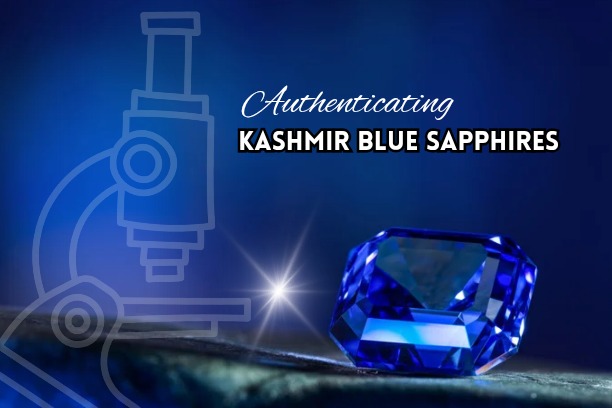
Kashmir blue sapphires remain among the most coveted gemstones in the world. Their velvety cornflower-blue color, fine silkiness, and legendary rarity have made them the benchmark for blue sapphire quality. However, because Kashmir sapphires command significant premiums, authenticating their origin is a rigorous and highly specialized process. Today, confirmation of Kashmir origin depends on advanced laboratory testing, geological understanding, and expert gemological analysis.
KASHMIR SAPPHIRE MINES
The original Kashmir sapphire deposits were discovered in the late 1800s in the Padar region of the Zanskar range. Mining continued only for a few decades before the primary deposits were exhausted. As a result, no new supply from the region enters the market today, and most Kashmir sapphires come from older collections. Authentication is therefore essential to prevent misrepresentation.
GEM TESTING LABS
Gemological laboratories such as GIA, SSEF, Gübelin, and other globally recognized institutions conduct detailed investigations before declaring Kashmir origin. The process begins with microscopic inclusion analysis. Kashmir sapphires often contain fine, short, and densely packed rutile silk that gives the stones their velvety glow. These silk patterns differ from those found in Sri Lankan or Burmese sapphires. Additionally, specific crystal inclusions, tiny platelet structures, and particular growth textures can point toward a Kashmir geological environment.
Another key factor is trace-element chemistry. Labs use advanced spectroscopy and chemical fingerprinting technologies such as LA-ICP-MS (Laser Ablation Inductively Coupled Plasma Mass Spectrometry) to analyze the elemental composition of the sapphire. The concentration and ratios of elements like titanium, iron, and magnesium, along with their internal zoning patterns, help establish whether the sapphire matches known Kashmir profiles. These chemical signatures, combined with inclusion features, create a highly reliable origin determination.
Color and appearance also play supporting roles. While Kashmir sapphires are typically associated with a velvety, soft royal to cornflower blue, color alone cannot confirm origin because similar hues can appear in stones from other regions. This is why laboratories rely on internal features and chemical markers rather than visual characteristics. When all gemological and chemical indicators strongly match known Kashmir geological data, the lab issues an origin report confirming Kashmir provenance.
TWO KASHMIR SAPPHIRES
Two notable modern-market sapphires illustrate the prestige attached to confirmed Kashmir stones. The Spirit of Kashmir is a remarkable gem known for its mesmerizing velvety blue color and exceptional overall beauty. Its certified Kashmir origin significantly enhances its status in the gemstone world. Similarly, the Zanskar Crown blue sapphire, another celebrated Kashmir-origin gemstone, highlights the geological richness of the historic mining region and the enduring demand for authentic stones from these ancient Himalayan deposits.
PREMIUM VALUE SAPPHIRES
Once a sapphire’s Kashmir origin is firmly authenticated, other factors such as size, clarity, and even minor inclusions take on secondary importance. Collectors and connoisseurs value provenance so highly that a moderately included Kashmir sapphire can command a higher price than a nearly flawless sapphire from any other location. The rarity of genuine Kashmir stones—combined with their historical legacy—ensures that origin remains the most critical determining factor.
Authenticating Kashmir sapphires involves a perfect blend of gemological precision, scientific analysis, and deep knowledge of Himalayan geology. As supply diminishes and demand grows, proper origin identification becomes more crucial than ever, ensuring transparency and preserving the legacy of one of the world’s most legendary gemstone sources.