
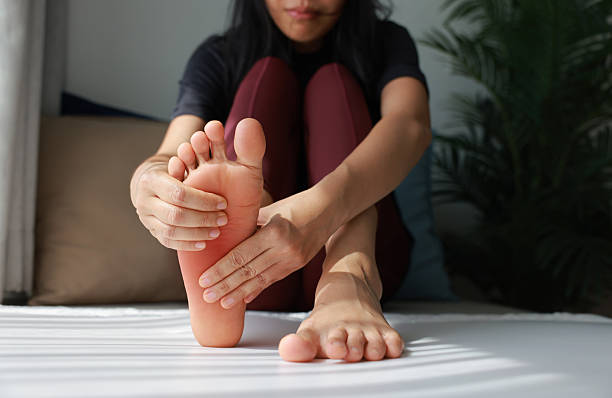
Comfortable movement depends on how well the ankle, toes, rearfoot, and arch work together under body weight. A small restriction in one area can shorten stride, disturb balance, and increase pressure elsewhere. Through focused mobility testing, an Athens podiatrist can identify movement limits linked to plantar fasciitis and other foot conditions.
Ankle Range of Motion Evaluation Using Weight-bearing Goniometry
Weight-bearing goniometry measures how far the shin moves forward over a planted foot without the heel lifting. This position reflects common movements such as walking, climbing stairs, and squatting more accurately than a relaxed seated test. Limited ankle dorsiflexion may force the foot to roll inward, turn outward, or raise the heel too early.
Precise measurements allow a podiatrist in Athens AL to compare both ankles and identify meaningful differences. Unequal motion may result from joint stiffness, a previous sprain, calf tightness, or a shortened Achilles tendon. Repeating the test later can show whether treatment has improved movement.
Great Toe Extension Testing to Measure Windlass Mechanism Function
Lifting the big toe should tighten the plantar fascia and raise the arch through the windlass mechanism. Restricted extension can weaken push-off, shorten the step, and shift pressure toward the heel or outside edge of the foot. Arthritis, an old injury, joint stiffness, or tight soft tissue may limit this motion.
During testing, a plantar fasciitis doctor checks toe movement with and without weight on the foot. Pain near the heel during extension may support a plantar fasciitis diagnosis, while discomfort inside the toe joint points toward another condition. Comparing both responses helps locate the true restriction.
Subtalar Joint Mobility Checks for Inversion and Eversion Limits
The subtalar joint allows the rearfoot to tilt inward and outward as the foot adapts to the ground. Too little movement creates rigidity and weakens shock absorption, while excessive motion may contribute to unstable pronation. Either pattern can transfer strain into the ankle, arch, and lower leg.
Manual checks help the examiner feel the available range between the talus and heel bone. Findings become more useful when combined with standing posture and gait observation. A stiff rearfoot may need mobility work, whereas an unstable joint may benefit from strengthening or added support.
Single-leg Stance Balance Assessment to Identify Instability
Standing on one foot tests control across the toes, arch, ankle, knee, and hip. Wobbling, toe gripping, arch collapse, or repeated loss of balance can reveal weakness that remains hidden during two-legged standing. Closing the eyes may further test the body’s position awareness.
Balance problems commonly follow ankle injuries, nerve conditions, or long periods of avoiding a painful foot. A plantar fasciitis specialist may record how long the patient holds the position and where the body shifts. Results guide exercises that rebuild stability without overloading irritated tissue.
Calf and Achilles Tightness Measurements During Dorsiflexion
Calf testing compares ankle movement with the knee straight and then bent. Greater restriction with a straight knee often suggests gastrocnemius tightness, while limited motion in both positions may involve the soleus, Achilles tendon, or ankle joint. This difference matters because each source may require a separate treatment approach.
Chronic tightness can increase pulling through the heel and cause an early heel rise during walking. Aggressive stretching may worsen pain if the fascia or tendon is already irritated. Careful measurement helps the clinician select a safer routine and monitor progress.
Midfoot Flexibility Testing Under Active Weight-bearing Pressure
Midfoot testing shows whether the arch remains rigid, collapses too far, or moves unevenly under pressure. A flexible flatfoot may appear normal while seated but drop during standing, while a high arch may remain stiff and concentrate force beneath the heel and forefoot. Both patterns can alter plantar fascia loading.
Hands-on assessment may include observing arch height, heel position, and movement across the midfoot joints. Pressure-related pain can indicate that the foot is not sharing weight efficiently. Supportive footwear, orthotics, and targeted strengthening may help when flexibility falls outside a useful range.
Functional Step-down Evaluation to Observe Dynamic Control
Stepping down from a low platform shows how the foot and leg manage weight during a controlled lowering movement. Knee collapse, heel lifting, arch flattening, or pelvic drop can expose poor coordination across the lower limb. These patterns often mirror the mechanics used on stairs, slopes, and curbs.
The Foot Clinic can combine step-down observation with joint measurements, balance testing, gait review, and foot posture assessment. This detailed evaluation helps determine whether plantar fasciitis, muscle tightness, joint stiffness, weakness, or poor alignment contributes to restricted movement and guides care based on the patient’s specific mobility needs.